Tim Cook ran supply chain before he ran Apple. Supply chain is one of the last fields where you can start with no connections, build real skills, and reach six figures within a decade — and this field guide is the roadmap.
For recent graduates, transitioning military, and career changers. Includes a full chapter on using AI in your supply chain job.
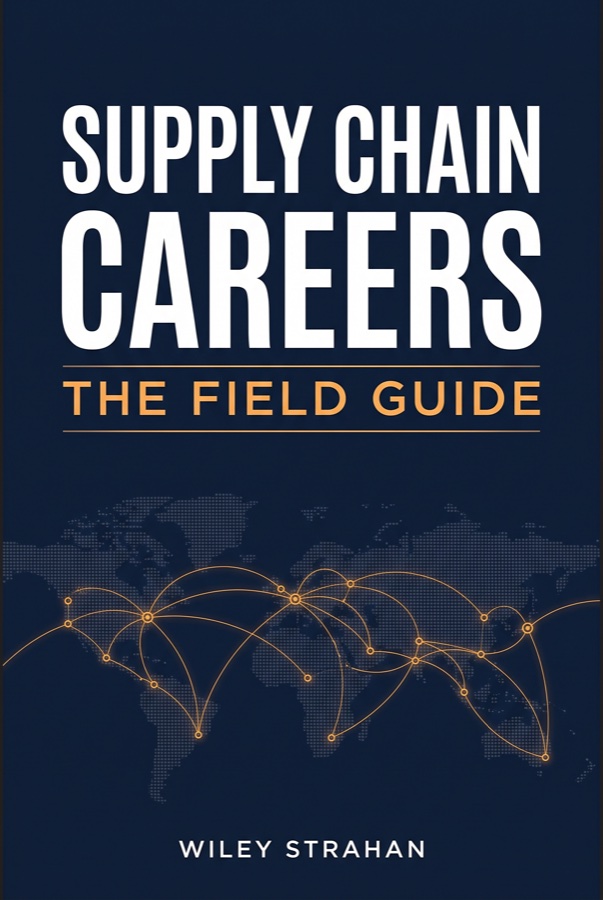
While everyone chases tech and consulting, supply chain professionals are quietly building six-figure careers with clear progression and real job security. The path has just been invisible.
Demand for logisticians is growing nearly five times faster than the average occupation, with roughly 26,400 U.S. openings a year — yet almost nothing teaches you how to navigate the career itself: which of the thirteen functions fits you, what each really pays, and how to break in from wherever you're starting. That's the gap this book closes. The tools below are pulled straight from its chapters — use them free. If they're useful, the book goes several levels deeper.
Nine chapters and six working appendices. Not a textbook — a field guide, written by an operator who ran a $500M+ logistics P&L.
The simplest working definition, how your iPhone actually reaches you, and the thirteen function areas — what each job really does, how it's measured, what it pays, and the red flags in postings.
Three pathways — recent grads, military veterans, career changers — plus the five skills that separate top performers: advanced Excel, SQL, process improvement, communication, systems thinking.
Picking your lane, getting hired (resume, interviews, negotiation), mid-career moves and plateaus, where the field is heading — and a hands-on playbook for using AI in your supply chain job today, function by function.
A 40-term glossary, six certifications compared by ROI, the military-to-civilian translation guide, salary tables for all thirteen functions, a 43-question interview bank, and a curated reading list.
Supply chain isn't one career — it's thirteen. Eight questions, two minutes, and you'll know which of the five archetypes you are and which functions fit. From Chapter 5 of the book.
U.S. total cash compensation, 25th–75th percentile, across all thirteen function areas. Click any row for the stage-by-stage detail. From Appendix D.
Sources: LinkedIn Salary Insights, Glassdoor, BLS OES, ASCM Annual Salary Survey (2024). Major metros run 20–40% higher; ranges exclude equity. The book's Appendix D adds certification ROI and negotiation benchmarks.
Your rating or MOS, translated into the civilian titles recruiters actually search for. Lead with outcomes and scale — dollars managed, team size, geographic scope — not the code. From Appendix C.
The book closes with a 90-day action plan for three starting points. Run yours here — progress saves in your browser, so come back and check things off as you go.
Careers aren't built through dramatic transformations. They're built through consistent, intelligent actions that compound over time. — Conclusion, Supply Chain Careers: The Field Guide
An occasional email from Wiley on supply chain career tactics — what's hiring, which skills are moving pay, and answers to the questions readers ask most. No spam, no schedule pressure, unsubscribe anytime.
One email at launch, then only when there's something worth your time.
The short list from Appendix F — the resources working professionals actually use.